YouCast: Not Another Astrology App
The Astrology App Problem Nobody Talks About
I’m going to say the quiet part out loud: most astrology apps are just content delivery systems dressed up in cosmic language.
You open them. You get a paragraph about Mercury retrograde affecting your communication. You close them. And then what? You still don’t know whether to send the email, sign the contract, or have the difficult conversation you’ve been putting off for three weeks.
That’s the gap. Not the astrology itself — the fact that almost none of these apps actually help you use what they tell you.
I’ve been building software for 24+ years. I know the difference between a product that surfaces information and a product that drives decisions. Most astrology apps are firmly in the first camp — beautifully designed, spiritually engaging, and ultimately passive.
YouCast is being built to live in the second camp.
What Is YouCast
YouCast is a multi-signal insight app that doesn’t anchor itself to a single symbolic system. Instead of picking one lens and running everything through it, YouCast pulls from astrology, lunar timing, I Ching, tarot, numerology, and eclipse context — then normalizes those inputs into trackable dimensions a user can actually compare over time.
Think of it less like a horoscope feed and more like a symbolic diagnostic dashboard.
That distinction matters more than it sounds. A horoscope feed asks you to absorb content. A dashboard asks you to engage with patterns. One is passive. The other is operational.
YouCast is designed around a repeatable signal framework with:
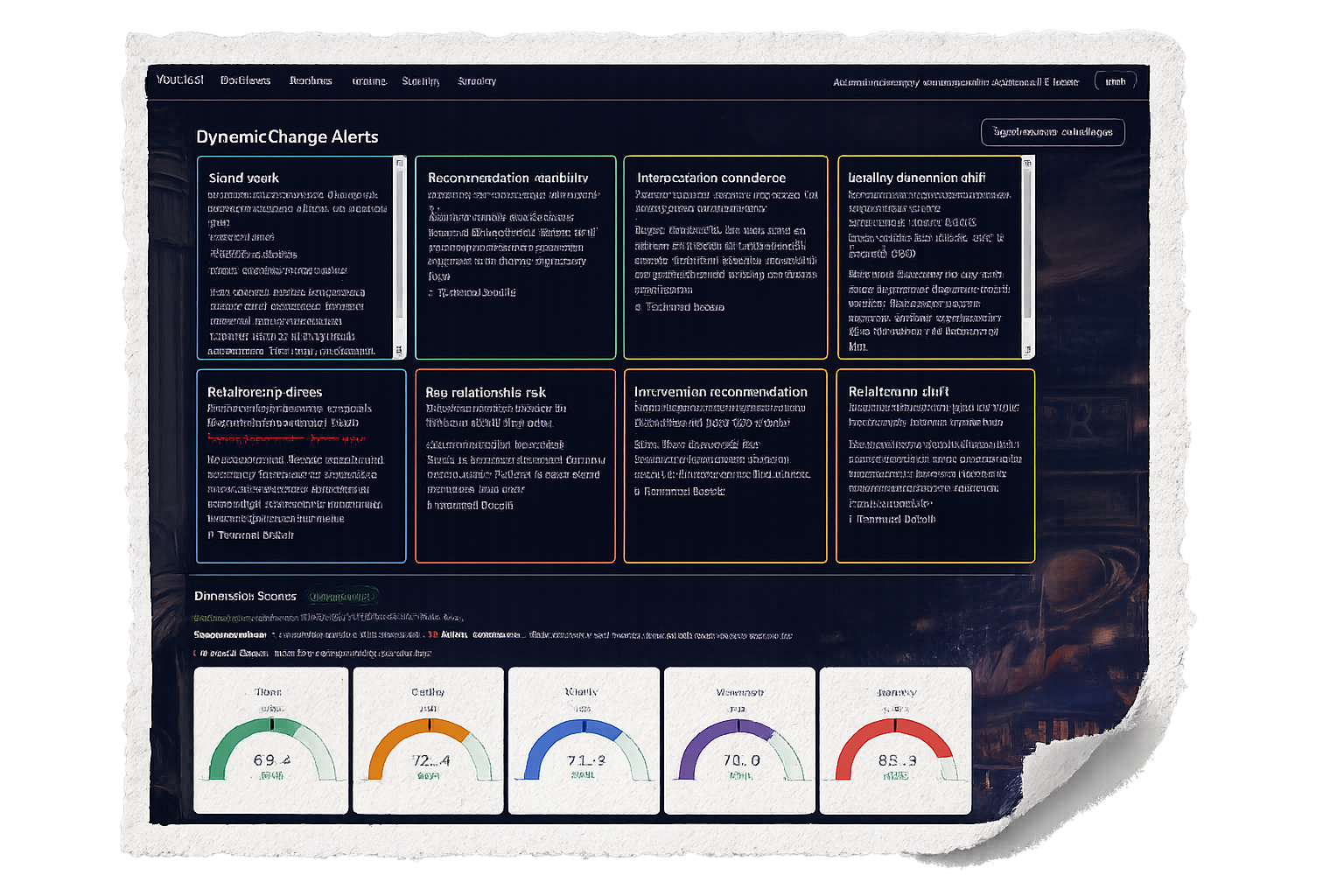
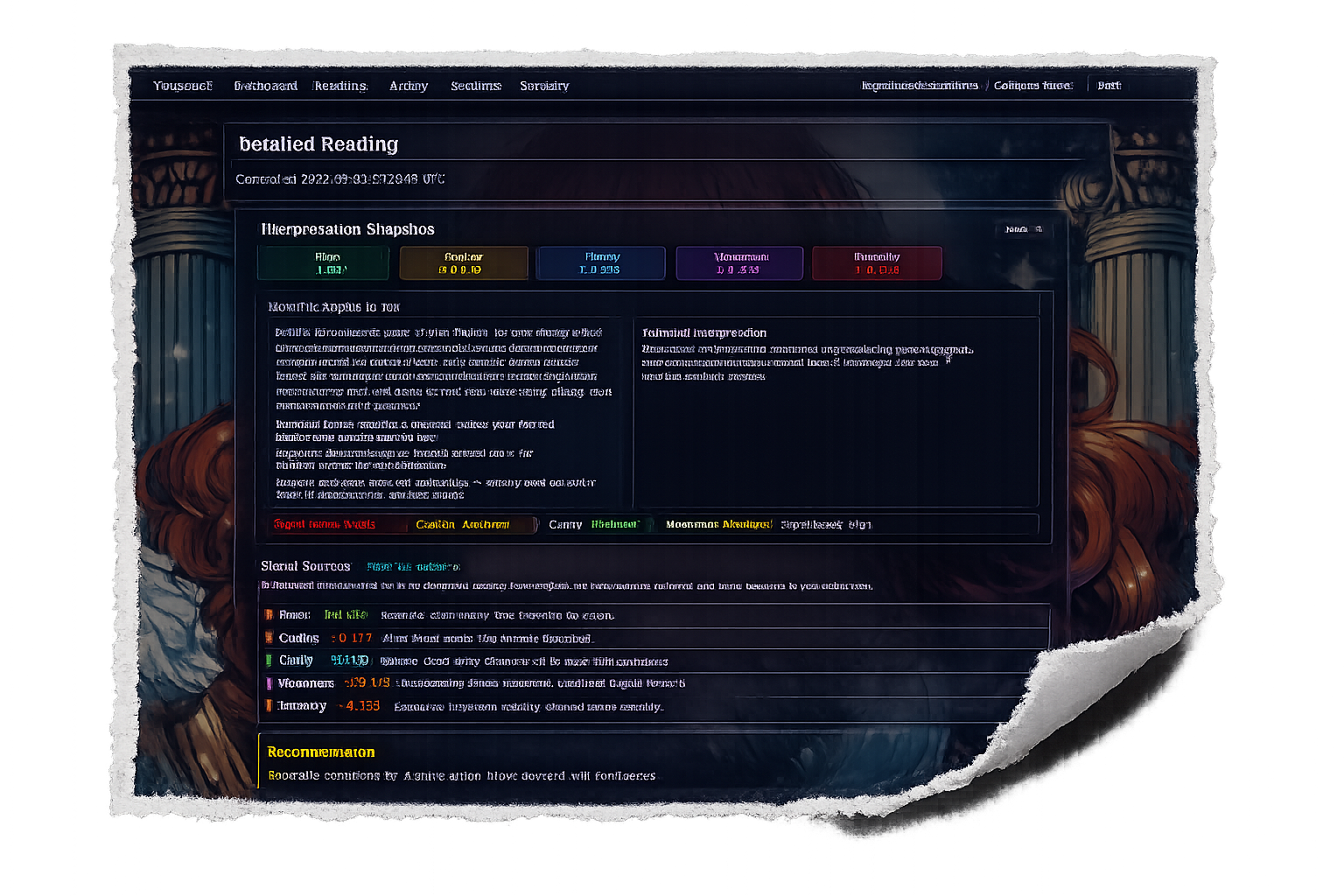
- Five normalized dimensions — flow, caution, clarity, momentum, and intensity
- Confidence and rubric indicators so you know how much to lean into a given reading
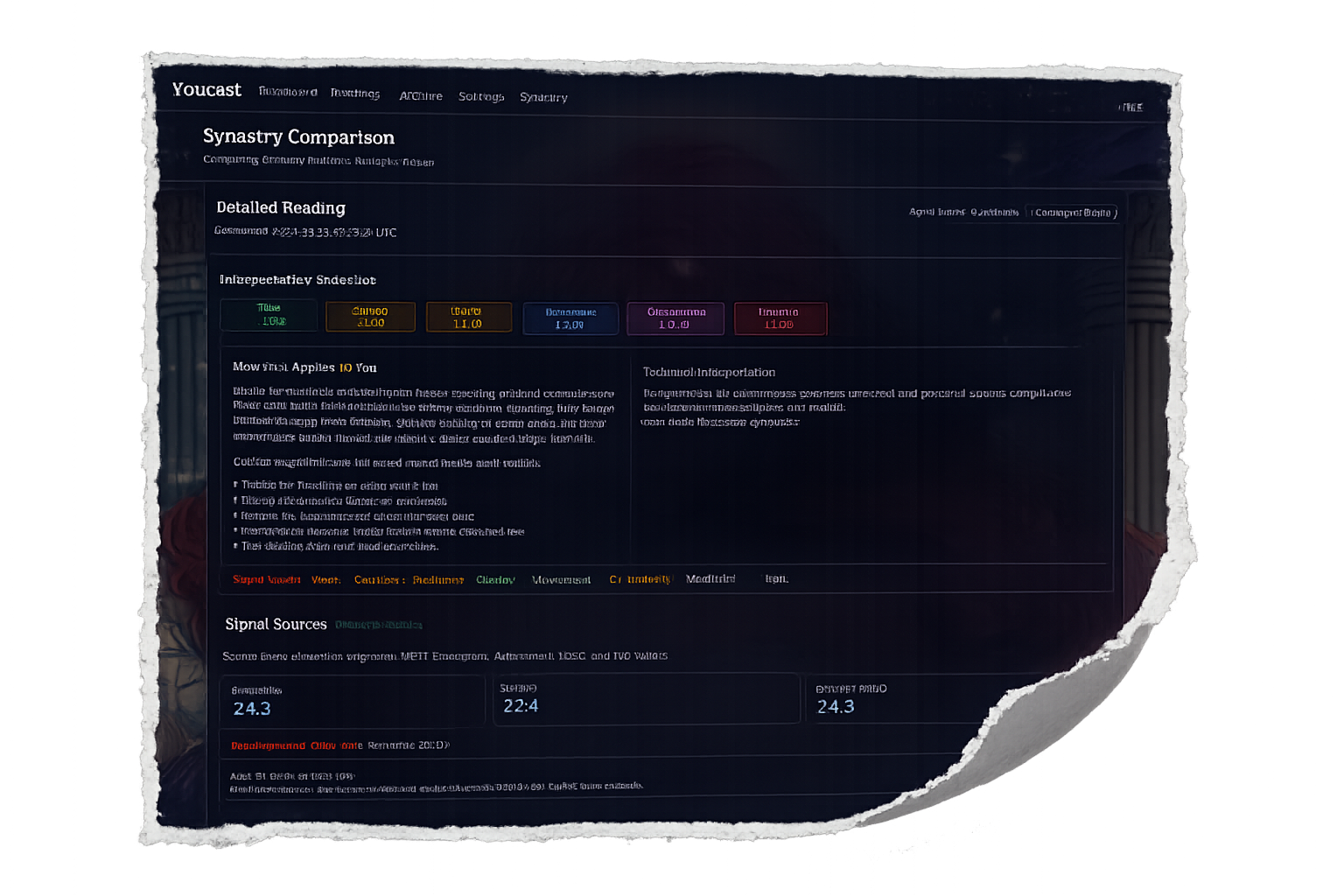
- Synastry and relationship comparison tools for romantic, business, family, and peer dynamics
- A reading archive so you can actually look back and verify whether the signals held up
- A personal profile layer that moves interpretation beyond generic chart output
It’s not trying to replace astrologers or spiritual practice. It’s trying to give users a structure that makes insight actionable instead of just interesting.
YouCast reading preview with dynamic change alerts and rubric scores
Why It Actually Stands Out
Here’s what I notice when I look at the competitive landscape: the apps that succeed in this space tend to pick a lane and stay in it. Co-Star owns the real-time personalized horoscope lane. The Pattern owns the deep personality narrative lane. TimePassages owns the serious astrologer tool lane.
None of them own the operational layer.
That’s what YouCast is after — and it’s a bigger gap than most people realize. When you build across multiple symbolic systems, normalize the outputs, expose confidence cues, and connect that to relationship data and a historical archive, you’ve created something qualitatively different from any of those apps. You’re not just showing a user their chart. You’re showing them a pattern engine they can interact with over time.
The key shift: YouCast moves the user from “what does this mean?” to “what do I do with this?”
That’s not a small thing. That’s the entire product thesis.
The layered interpretation model also means YouCast can serve users at different levels of familiarity. You don’t have to be a seasoned astrologer to get value from it. The dimension scoring and confidence indicators do a lot of the translation work for you — which is exactly what you’d want if you’re building for a modern audience that’s curious about symbolic systems but doesn’t want a certification before they can get a useful reading.
Features, Benefits, and Real Uses
Let me break this down practically, because the table format is the right call here. Too many product posts bury the value in prose:
| Feature | Why It Matters | How To Use It |
|---|---|---|
| Multi-signal fusion (astrology, lunar cycles, I Ching, tarot, numerology, eclipse context) | Broader reading framework — no single system has the full picture | Use it to get a more complete daily or weekly interpretation before making personal, creative, or relational decisions |
| Five normalized dimensions | Turns symbolic input into a structured format you can compare over time | Track shifts in flow, caution, clarity, momentum, and intensity — not just isolated daily forecasts |
| Confidence and rubric indicators | Tells you how much to trust a given reading | Separate high-confidence timing signals from more tentative interpretations so you’re not over-indexing on noise |
| Synastry and relationship comparison | Makes interpersonal dynamics visible across different relationship modes | Compare romantic, business, family, or peer compatibility side by side — not just “are we compatible?” but how and when |
| Reading archive | Preserves history for reflection and pattern recognition | Review how past readings aligned with real events, mood shifts, or decision cycles — and calibrate accordingly |
| Personal profile and psychological overlays | Moves beyond generic chart interpretation | Personalize readings around your values, traits, and behavioral tendencies |
| Connector-ready architecture | Future-proofs the platform for richer integrations | Foundation for a more connected life-pattern system as the product evolves |
The thing I keep coming back to is the archive and confidence layer. Most apps treat every reading as ephemeral — you check it, you move on. YouCast is designed to accumulate signal over time, which means it actually gets more useful the longer you use it. That’s a fundamentally different product mechanic than anything in the current competitive set.
YouCast vs. The Competition
I want to be direct here, because vague comparisons do nobody any favors. The main competitors in this space are Co-Star, The Pattern, and TimePassages. They’re all good products. They’re also all doing something different from what YouCast is built to do.
| App | What It’s Known For | Where YouCast Is Different |
|---|---|---|
| Co-Star | Personalized real-time astrology content built from birth data, compatibility, and NASA-based positioning | Co-Star delivers daily content. YouCast delivers a repeatable signal framework. The difference is passive vs. operational — and that changes the whole user relationship with the product |
| The Pattern | Deep personality insights and life-cycle analysis focused on self-understanding and interpersonal dynamics | The Pattern is excellent at narrative personality work. YouCast pairs that self-insight function with timing signals, multi-system fusion, synastry tools, and archive-based review — the emphasis shifts from who you are to what’s happening and what to do about it |
| TimePassages | Detailed birth charts and astrology tools trusted by serious users and professionals | TimePassages has the chart depth. YouCast brings a more modern product layer on top — dimension scoring, confidence displays, relationship dashboards, and a cross-system interpretation model that doesn’t require astrological fluency to navigate |
None of those apps do what YouCast does. That’s not a knock on them. It’s a statement about the opportunity YouCast is specifically targeting — the gap between “here’s what your chart says” and “here’s how to use it.”
In a crowded market, that gap is the differentiator.
Who It’s For
Let me be blunt: YouCast is not for people who just want daily affirmation content. If you’re happy with a paragraph about your sun sign and a compatibility percentage, Co-Star and a dozen other apps already have you covered.
YouCast is for the user who is already curious about symbolic systems but frustrated that none of the existing tools give them a way to apply what they’re reading. It’s for the person who wants to understand timing — not just mood. Who wants to compare relationship dynamics across multiple dimensions, not just “are we a match.” Who wants to look back at three months of readings and see whether the signals tracked with reality.
That’s a specific kind of user. But it’s also a real and underserved one.
As a developer, I think about product-market fit in terms of the problem that isn’t being solved yet. In the astrology and insight app space, the unsolved problem is the operational layer — the jump from insight to action. YouCast is the first product I’ve seen that’s genuinely going after that gap with a thoughtful product structure behind it.
That’s why I think it has real legs. Not because the astrology is novel, but because the product mechanics are.
The Beta Release Program
I also want to be clear about how the beta is going to work, because this is not a “free early peek” situation. The YouCast beta release program will be offered at $4.99 for access, and that decision is intentional.
The first release will be web-based while I finish tightening up bugs, smoothing out rough edges, and working through the last round of enhancements before the full product release. That gives me the fastest path to getting real usage in front of the platform without pretending the product is already in its final form.
The other reason beta access is paid is simple: usage matters. I need real metrics to establish the validity of the system, the usefulness of the platform, and the accuracy of what YouCast is actually producing over time. Free users often browse. Paid beta users tend to engage, test, and tell you what is and is not working.
That beta relationship cuts both ways. Users will be getting early access to the system at a low entry price, and in return they will be expected to help improve it. That means providing feedback, suggestions, logs, and usage data back to the platform so I can evaluate usability, identify friction points, and measure how well the reading model holds up in the real world.
This is not about collecting noise. It’s about building enough structured evidence to know what deserves refinement, what deserves expansion, and what is already landing the way it should.
Upon final release, beta users will also need to be comfortable providing testimonials and allowing their comments to be shared publicly on the web. If people find the system genuinely useful, I want that feedback documented clearly and honestly.
So the beta is for users who want to do more than casually poke around. It’s for people who want early access, want to help shape the product, and are willing to participate in making the platform stronger before the full release.
Comments
Loading comments...
Leave a Comment