The Problem: Retail at a Disadvantage
Retail crypto traders face a noisy, fast-moving market where scams, rug-pulls, and poorly written smart contracts routinely exploit inexperienced users. Large quant firms and institutional desks have sophisticated tools and data access that most retail participants simply don’t have.
CryptoQT™ was built to close that gap—giving retail investors access to institutional-grade detection and analysis without the Wall Street budget.
My Goals
- Detect scams and assess token risk in real-time
- Analyze smart contracts for vulnerabilities and malicious patterns
- Identify behavioral anomalies that indicate problematic tokens
- Provide a backtestable, configurable strategy builder with risk controls
- Keep it accessible to retail traders without prohibitive costs
Architecture & Approach
The platform is built as a modular pipeline so each component can scale independently:
Data Ingestion & Indexing — On-chain data is streamed from node infrastructure and indexed in near real-time. We track token events, transfers, liquidity pool state changes, and contract behavior.
Feature Engineering — Behavioral and structural signals are extracted from on-chain activity and contract code. These signals feed into both machine learning models and rule-based detection systems.
Risk Classification — Supervised models trained on labeled data provide probabilistic risk scoring for new tokens. The system is designed to be interpretable, so users understand why a token is flagged.
Smart Contract Analysis — Static and dynamic analysis of contract code identifies risky patterns, potential honeypots, and unusual behavior. This is combined with bytecode inspection for obfuscated logic.
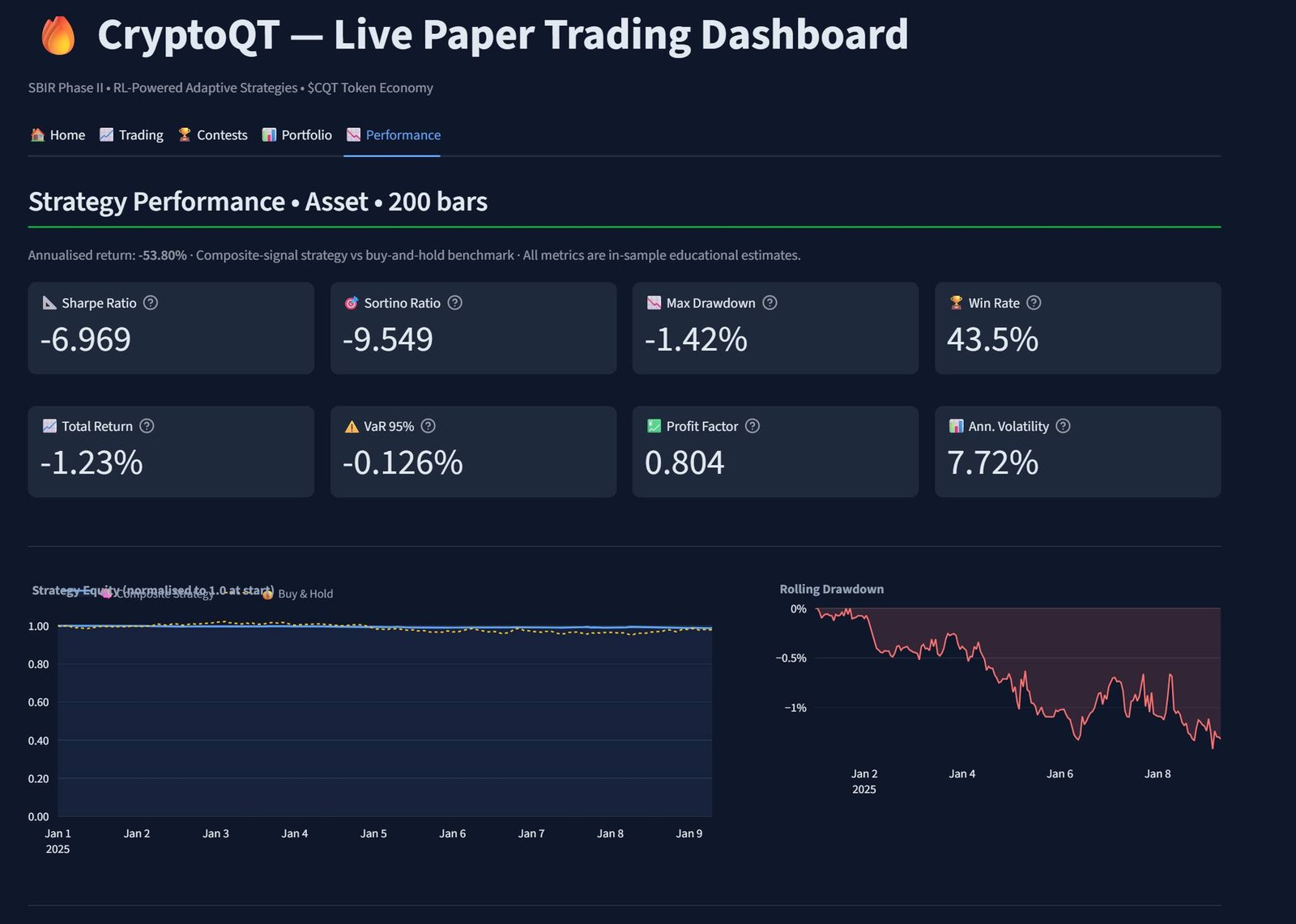
Strategy Engine & Backtester — Users can compose trading strategies from building blocks (entry/exit rules, position sizing, risk management) and backtest against historical on-chain data snapshots.
Execution Layer — Optional integration with DEX infrastructure for automated execution. All production execution requires explicit user configuration, and the system never assumes custody of user funds.
Dashboard & Alerts — A clean interface surfaces risk assessments, alerts, and insights. Email, SMS, and webhook notifications keep users informed of important events.
Key Technical Decisions
Python Ecosystem — Python is the primary implementation language for data pipelines, machine learning, and integrations. It enables fast iteration and provides mature libraries for on-chain analysis.
Hybrid Data Approach — I use both real-time and historical on-chain data to ensure consistent behavior during backtesting and live analysis. This allows users to trust that historical backtests accurately reflect real platform behavior.
Interpretability First — I prioritize interpretable models with explainability overlays. Users need to understand why a token is flagged, not just receive a score from a black-box system.
Security-First Execution — All execution paths are isolated and require explicit configuration. User funds are never held by the platform, and execution features are opt-in, not default.
Results & Current Status
The platform has demonstrated strong performance on detection tasks:
- Detection Quality — High-confidence risk assessments show balanced precision and recall, with low false-positive rates in production.
- MVP Complete — Core features are functional: ingestion pipeline, risk classification, contract analysis, and backtesting engine.
- Operationally Sound — The system runs reliably in production with robust monitoring, retry logic, and failure handling.

What’s Next:
- Expand the scope of detectable patterns
- Add support for additional blockchain networks
- Refine the strategy builder interface based on user feedback
- Build community contributions around detection heuristics
Lessons Learned
Data quality is everything — Labeled datasets are hard to assemble and easy to bias. I spent significant time curating training data to ensure the models reflect real-world token behavior, not artifacts of labeling errors.
Simplicity beats sophistication — Clear, interpretable signals and straightforward heuristics are more valuable than complex models when users need to trust the system. A user who understands a detection rule will use it; a user who doesn’t understand why they’re getting an alert will ignore it.
Operations matter more than you think — Maintaining an indexed view of on-chain data and replaying historical chain state requires robust infrastructure: reliable RPC access, clever caching, retry logic, and observability at every step. Get this right or spend the next year debugging data inconsistencies.
Try It & Get Involved
CryptoQT™™ is being built in public as an active experiment. If you’re interested in testing the platform, contributing data or insights, or partnering on security research:
- Test the platform — Contact me for early access or demo
- Contribute data — Help us build better detection by reporting scams or suspicious tokens
- Security reviews — If you’re a smart contract security expert, we’d love to work with you
- Feedback & ideas — Join the conversation about what retail traders need
Want to discuss crypto intelligence, detection strategies, or building trusted tools in Web3? Reach out — I’m always interested in conversations with builders, researchers, and traders working on similar problems.
More CryptoQT™ Resources
Related Articles:
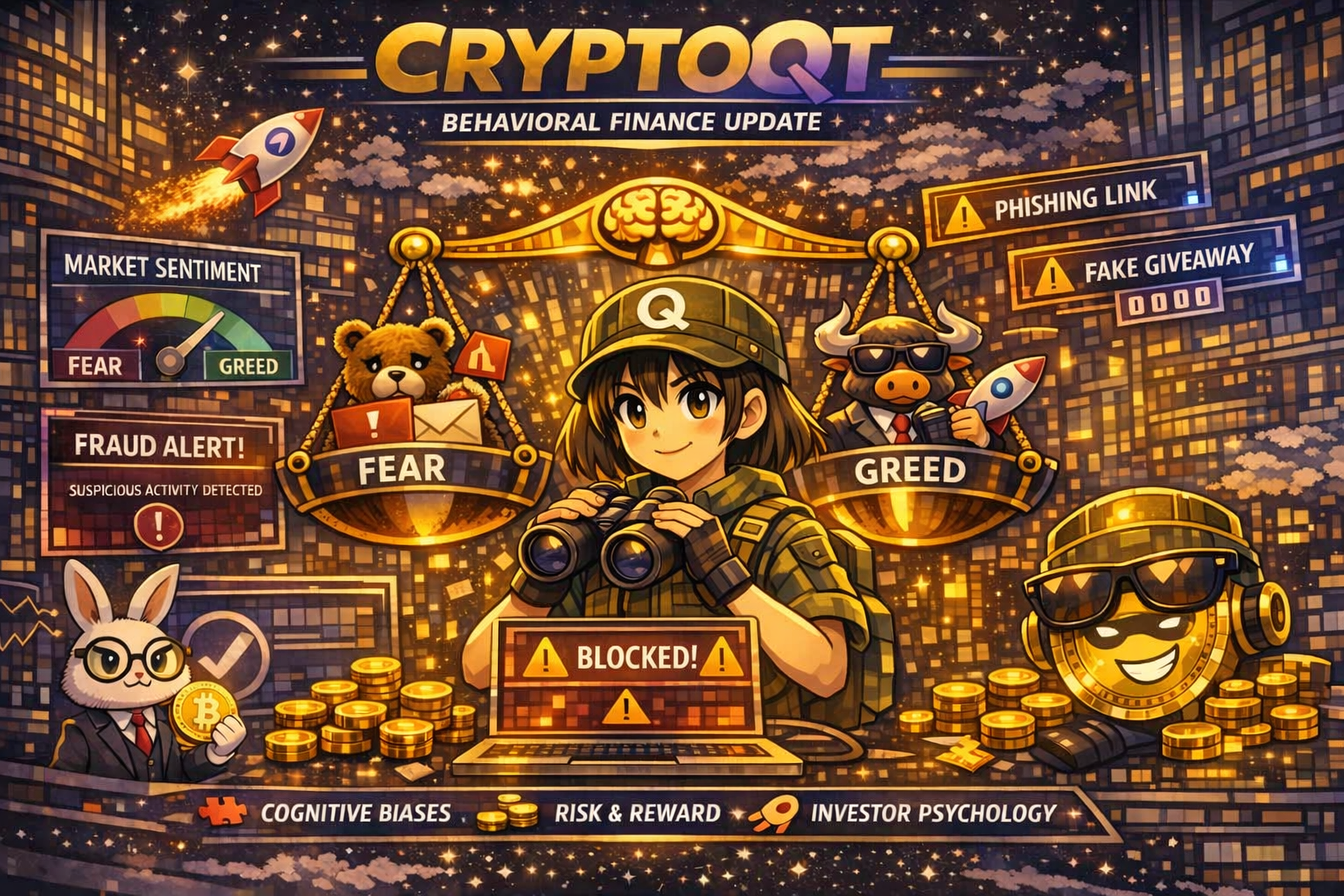
- CryptoQT™ Behavioral Finance Update — Deep dive into behavioral finance signals and how they inform token detection
- How Crypto Scam Bots Are Stealing Millions — Understanding the scams CryptoQT™ helps protect against
- XpertConnect: AI-Powered DIY Guidance — Our broader approach to building trusted AI systems
Follow the Project:
- What’s New — Latest CryptoQT™ updates and progress
- Contact — Get early access, contribute, or discuss partnerships
External Resources:
- Quantitative Trading — Investopedia — What quant trading is and how it works
- Behavioral Finance — Investopedia — The theory behind market psychology
- Smart Contracts — Ethereum Docs — How blockchain-level automation works
Comments
Loading comments...
Leave a Comment