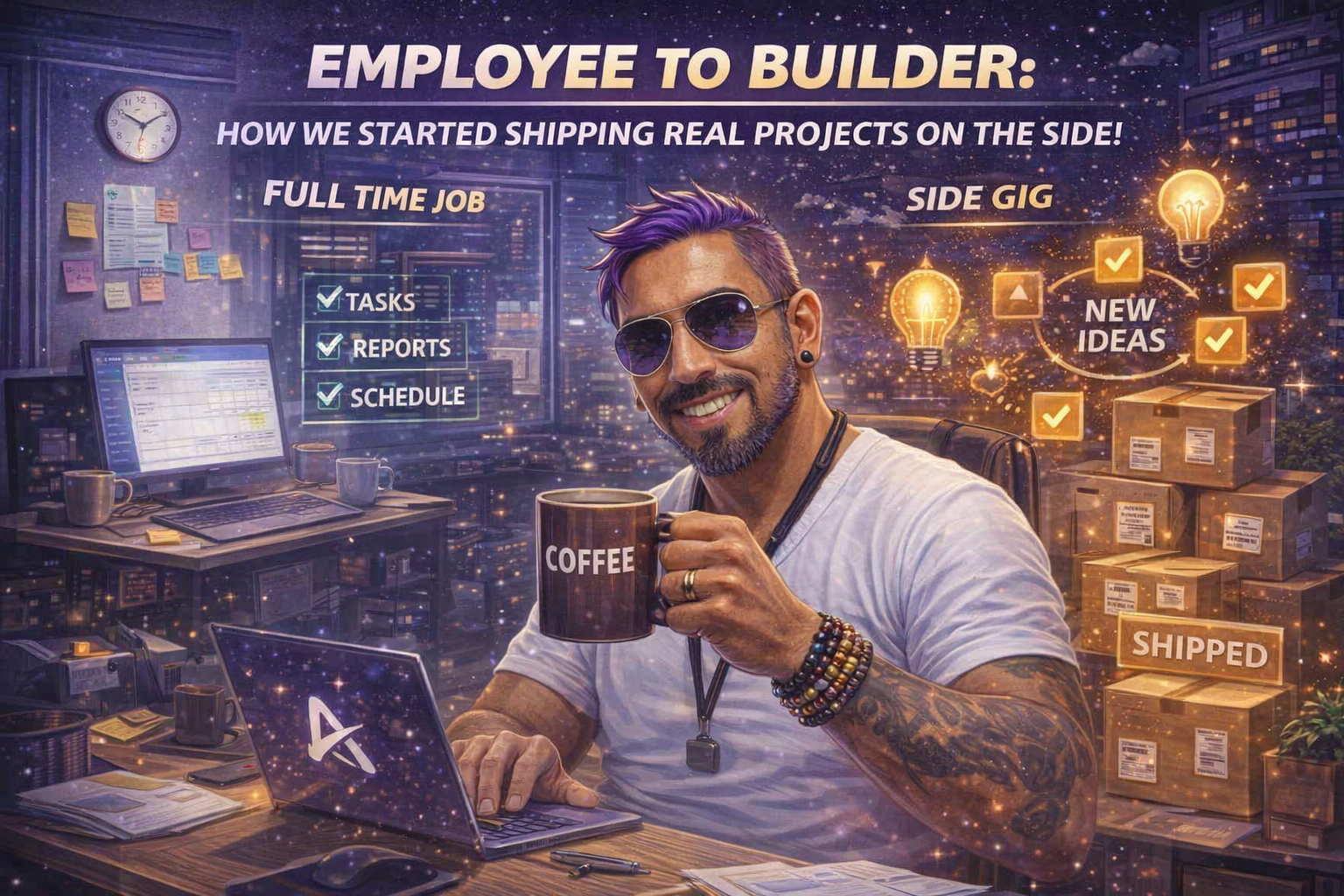
For nearly two decades, I was the consummate employee. I mastered the .NET stack, solved complex problems for Fortune 500 companies, and had the credentials to back it up. But in 2026, I started experiencing what thousands of candidates are discovering:
Applying to jobs online no longer works.
As Kylie Lenz pointed out recently, candidates are sending out 100, 200+ applications and hearing… nothing. Not because they’re underqualified. Not because their resume is broken. Because ad response rates have collapsed. The “apply online” button has become a black hole.
But my story isn’t just about silence on job boards. It’s about what happens when you do get a response.
The Reality: Scams, Bad-Faith Employers, and Discrimination
While job boards were silent, they were also toxic. Here’s what I experienced:
Strong Steps Behavioral Health contacted me for freelance WordPress work. Project completed. Payment never came. They ghosted.
Another “company” asked for my banking information upfront before disappearing from Indeed entirely. Thankfully my spidey-senses kicked in right away and when they kept hounding me for private information I ghosted them 🤣.
Automated Integration Technologies terminated me after I got COVID. (The EEOC issued me a right-to-sue letter. Make of that what you will.)
These weren’t isolated incidents. They’re symptoms of a broken market where:
- Scammers exploit job seekers for free work
- Bad employers face zero accountability
- Candidates waste months applying with zero response
- The risk-reward ratio is completely inverted
So I made a decision: Stop playing a game with broken rules.
Instead of relying on job boards, I shifted my focus to building my own products, developing solutions, and generating my own client base. I stopped being a candidate in a rigged system and became a builder in a system I control.
The Pivot: From Job Applications to Product Development
The problem? I fell into the “Senior Developer Trap.” I would start a side project, over-engineer the architecture, spend three months picking a CSS framework, and eventually abandon it when work got busy.
Last year, I changed my approach. I stopped “coding” and started shipping. Here is how I made the mental and technical shift from employee to builder.
1. The “Good Enough” Architecture
In my day job, I build for 99.99% uptime and infinite scalability. On a side project, that mindset is a death sentence.
I learned to embrace Boring Technology. I stopped chasing the latest JavaScript flavor-of-the-week and went back to what I know best: .NET and simple SQL.
- The Rule: If I can’t deploy a basic version in 48 hours, the scope is too big.
- The Goal: Build the “Minimum Viable Product” (MVP), not the “Maximum Possible Version.”
2. Solving My Own Itch
The biggest mistake builders make is trying to build “The Next Facebook.” I stopped looking for “billion-dollar ideas” and started looking for 10-minute frustrations.
I looked at my own workflow. I looked at the repetitive tasks I did for clients. When you build a tool to solve your own problem, you are your own best QA department. You know exactly when the “Product” is finished because the “Pain” is gone.
This is the opposite of job hunting in 2026—where you’re constantly solving other people’s problems (applications, interviews, negotiations) only to be ignored or exploited.
Building for yourself is inherently different. You’re the customer, the stakeholder, and the decision maker. There’s no hiring manager to ghost you, no “we’ll be in touch,” no scams.
3. Shipping is a Muscle
Shipping isn’t a one-time event; it’s a habit. I started setting “Ship Dates” instead of “Feature Goals.”
Vantage Point: A mediocre app that is live on the internet is infinitely more valuable than a perfect app sitting on
localhost.
I forced myself to get comfortable with the “Public Beta.” Putting your work in front of strangers is terrifying, but it’s the only way to find out if you’re actually building something people want.
Here’s the difference from job hunting: When you ship, you get real feedback. Real users. Real (or zero) revenue. There’s no ambiguity. The market tells you instantly if you’re onto something.
4. The “Side Project” is the Best Resume
Since I started shipping my own projects, the conversations I have with potential clients and partners have changed completely. They no longer ask about my years of experience or certifications; they ask about the live tools they see on my website.
Being a “Builder” proves you understand:
- Product-Market Fit: You know why you’re building (not just chasing whatever was on the job board).
- Deployment & DevOps: You can take a project from
$ git initto a live URL without depending on corporate infrastructure. - Resilience: You can finish what you start (unlike the job market, which can terminate you for getting sick).
- Independence: You’re not vulnerable to a hiring manager’s mood, a company’s whims, or discriminatory practices.
5. The Network Is the Deal (Not the Job Board)
This is the crucial insight from Kylie’s post: The people who succeed in 2026 are the ones who invested in relationships, not applications.
Referrals from colleagues. Direct relationships with people inside companies. Recruiters with real connections. These are the routes that actually get you in front of a decision maker with a real conversation attached.
But here’s what I realized: If you’re building your own products, you don’t need that network for survival—you’re already making moves. Your network then becomes collaborative rather than desperate.
You’re not asking for a job. You’re talking to other builders, sharing what you’re working on, and opening doors to partnerships, collaborations, and opportunities that job boards would never surface.
Summary: Stop Applying, Start Building
If you’ve been sitting on an idea for years (or if you’ve been battered by the job market like I have), here’s my advice: Delete your current repo and start smaller. Build the smallest possible thing that solves a problem, and ship it this weekend.
The world doesn’t need more “Employees who can code.” It needs more “Builders who can solve.”
And if you’re currently in the job search grind, remember:
- 100+ applications with zero responses? That’s not a signal that you need a better resume. That’s a signal that the system is broken.
- Scammers on job boards? They’re there because the market has no friction and zero accountability.
- Been terminated unfairly? At least you have a right-to-sue letter. But you also have the knowledge to build something better.
The answer isn’t to apply harder. The answer is to build.
Let’s Build Your Vision Together
I’ve spent 24+ years shipping software—first for the world’s biggest companies, surviving scams and discrimination, and now building products that actually matter. If you have an idea but don’t know how to bridge the gap from “Concept” to “Production” (or if you’re tired of the job market’s broken game), let’s talk.
- Collaborate: Work with me to turn your project idea into a shipped reality.
- Follow Along: See what I’m shipping in real-time on What’s New.
- Network: Connect on LinkedIn.
Read Next: Building Your Independent Income
Want to dive deeper into entrepreneurship and indie building?
- Why I Chose Astro — Technical decision-making for indie projects
- Data Pipeline Guide — Building systems that scale without corporate overhead
- CryptoQT: Building Crypto Intelligence — A real example of a product I’m building independently
- 24 Years in .NET — Lessons from staying relevant through technological change
- Crypto Scam Bots Exposed — Why you can’t trust shortcuts (relevant to job market trust issues)
Stop applying. Stop hoping. Start shipping. The job market won’t save you—but building something will.
Comments
Loading comments...
Leave a Comment